If you make a purchase using our links, Business Insider could receive an affiliate commission.Learn more
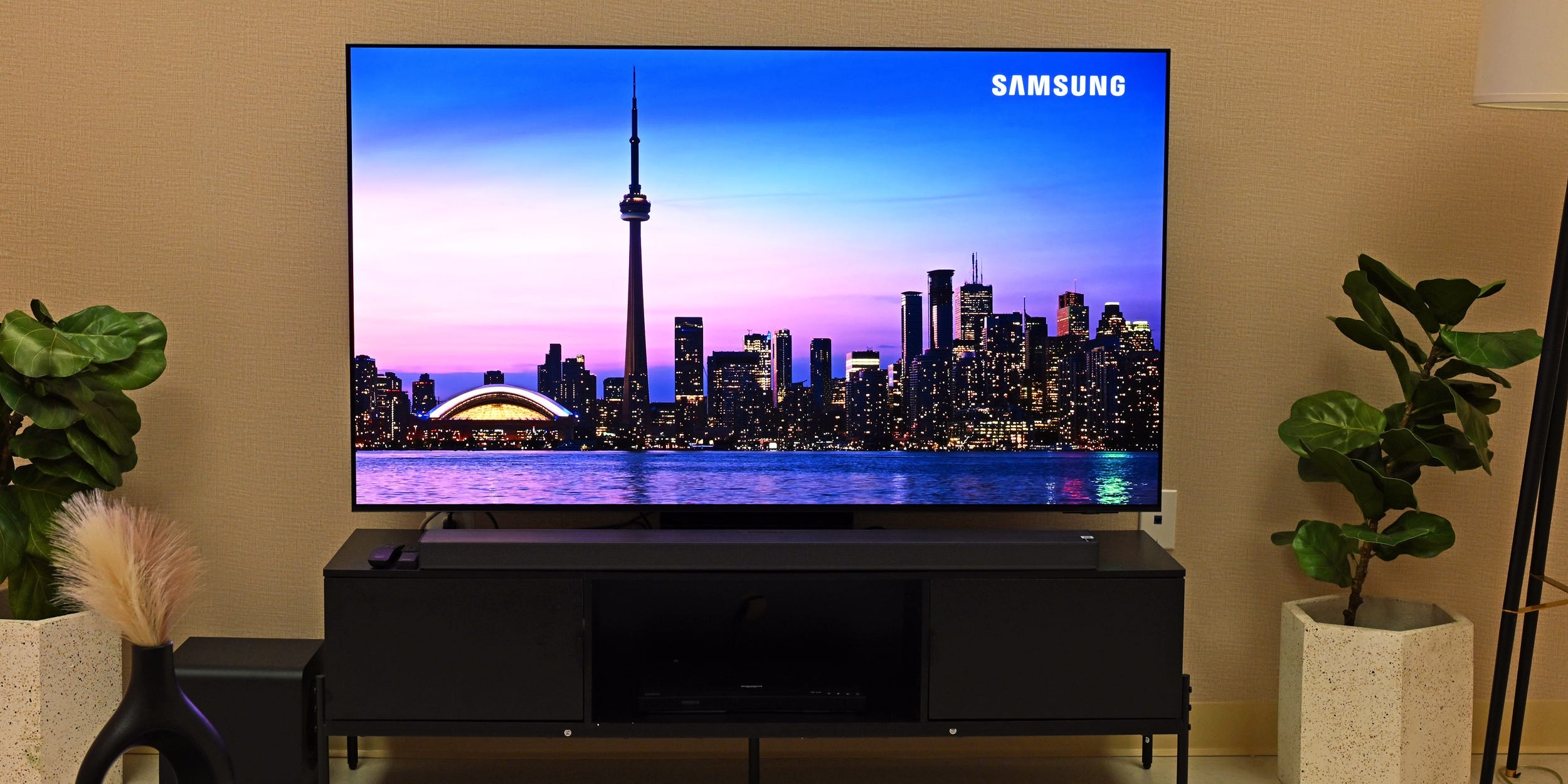
The Samsung S95Fis the company's top-of-the-line OLED television for 2025, and it continues to impress. Its visual quality is almost unmatched, and the non-reflective matte display effectively minimizes annoying reflections. This makes it an ideal choice for viewing sports in a well-lit space, and it's one of mytop Super Bowl television suggestions.
Nevertheless, the S95F's matte finish negatively affects the television's black levels. Although Samsung highlights a range of Vision AI capabilities, none of these features are as impressive as the company's promotional content suggests.
However, despite a few disadvantages here and there, the S95F's numerous advantages surpass its shortcomings. A new 2026 version of this set, known as the S95H, is set to be released later this year, but it is anticipated to be significantly pricier, and it remains uncertain how substantial the improvements will be. As long as you appreciate its matte display, the S95F still stands as one of thetop televisions for image clarity, and recent reductions have made it an excellent choice for those looking for top-tier performance.
A slim frame and user-friendly connection panel enhance the television's appearance.
The Samsung S95F is available in 55-, 65-, 77-, and 83-inchdisplay dimensions. Except for the 83-inch option, all sizes feature a QD-OLED panel. The "QD" refers to quantum dots, a color technology that provides a broader and more vibrant color spectrum compared to standard OLED screens.
The 83-inch version does not incorporate quantum dots and instead utilizes alternative panel improvements to achieve brightness levels similar to those found in quantum-dot models. Samsung has not officially disclosed the type of panel used in the 83-inch model, although it is probable that it employs a four-layer OLED, akin to the one featured in LG's premium G5.
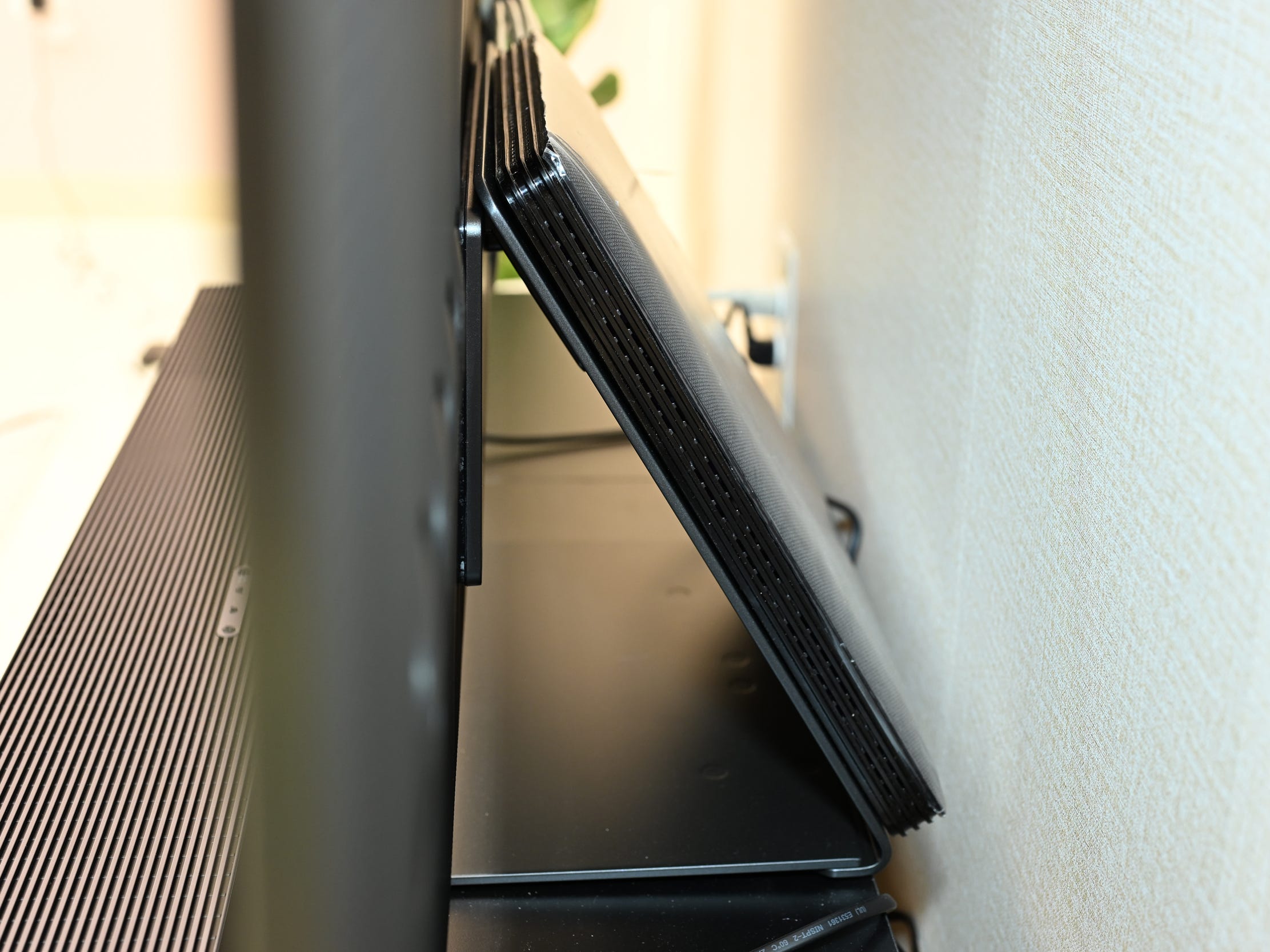
Measuring less than half an inch in thickness, the S95F has a significantly slimmer design compared to most rival QLED screens, which need bulkier panels to support their lighting systems. All models also include the company's "One Connect Box." This external unit contains the TV's connections instead of integrating them into the screen itself. This method offers greater versatility for cable organization, allowing you to either attach the box to the back of the TV or conceal it within a media cabinet.
The S95F delivers a vivid, sharply defined image that is almost perfect.
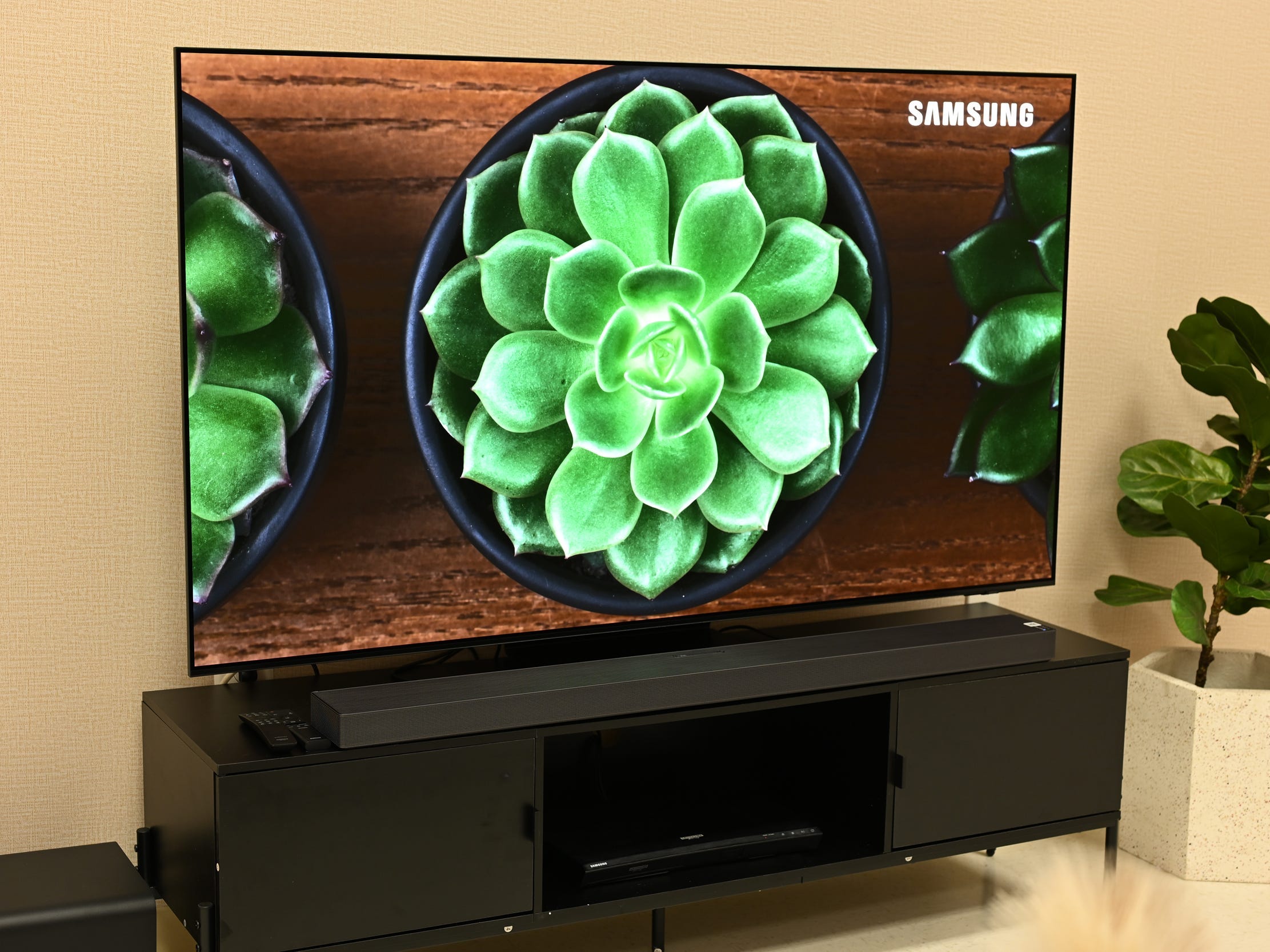
I evaluated the S95FDuring a full-day testing session at Samsung's New Jersey location. To evaluate picture performance, I carried out my standard testing procedure. This includes measuring brightness using a colorimeter and testing a range of scenes I have selected from movies and TV shows that showcase different image quality aspects. For the majority of my testing, I used the TV's "Filmmaker Mode," as it provides the most accurate default picture setting, but I also tested other modes to understand their visual appearance.
At first, there was something unusual about the S95F's image quality. The colors appeared unusually muted in some scenes, and the screen's contrast seemed less vibrant than anticipated. Another reviewer who was at the same event observed similar problems. Samsung performed a factory reset on the TV, and suddenly those issues were gone, with the S95F displaying its expected impressive visuals. I'm not entirely sure what caused the problem, but the TV I tested was a pre-production model, so it's common for there to be some remaining software glitches.
The key point is that the S95Feventually left me amazed with its visual clarity. This is among the brightest OLED televisions I have evaluated, and it comes second only to theLG G5, which becomes slightly brighter. On a 10% test pattern (a white box that covers 10% of the screen), the TV produced an impressive 2,170 nits, which is almost 500 nits higher than what I recorded on the previous model.S95D. The S95F also continued to maintain its brightness for a longer duration.
As the most striking parts of many films and television programs are brief moments, a 10% test pattern is crucial for assessing a display'shigh-dynamic-range(HDR) performance. Many HDR productions are designed for 1,000 nits, although content created for 2,000 and 4,000 nits is increasingly prevalent. An OLED capable of exceeding 2,000 nits represents a significant achievement, as it can deliver a more precise depiction of how HDR films and television programs are intended to appear.
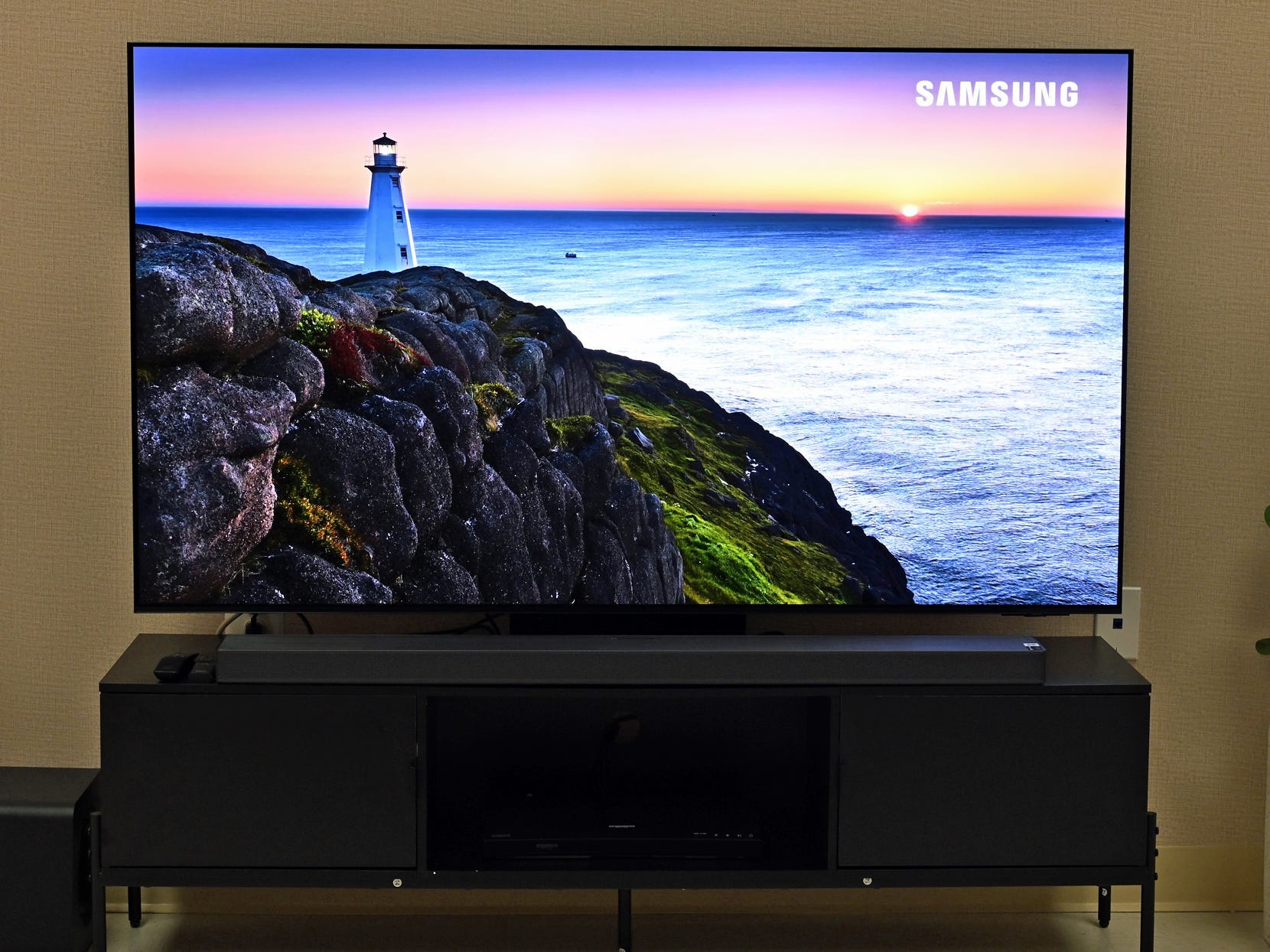
Scenes from "Mad Max: Fury Road" and "Aquaman" on 4K Blu-ray effectively demonstrated the S95F's performance. Both films are engineered for exceptional brightness exceeding 1,000 nits, and theS95Fcould generate reflective highlights, such as lightning strikes, fiery detonations, and gleaming armor, with more brightness than earlier OLED models. Additionally, the television's colors were also vivid, effectively portraying the colorful underwater realm of Atlantis with deep richness.
As this is an OLED, the S95F's contrast capabilities are among the best available. The OLED screen's ability to dim individual pixels provides an infinite contrast ratio, with extremely dark blacks that vanish in a dimly lit environment. Scenes from "The Matrix" and "1917" were excellent demonstrations of this: shadows were pitch-black while bright parts of the image, such as a flashlight or an exploding flare, stood out against the dark background without any issues with blooming.
Even premium QLED televisions equipped with high-end Mini LED panels can experience some backlight variations and halos during complex scenes, such as the burning church sequence in "1917," but theS95Fmanaged this kind of content without any problems. You can find out more about the advantages and disadvantages of OLED technology in ourQLED vs. OLED comparison.
In addition to high-quality 4K content, I also tested lower-resolution HD sources from YouTube and Samsung TV Plus (the company's free ad-supported streaming application). While Sony is frequently praised for its top-tier upscaling and image processing, Samsung and LG have significantly improved in this area, with the S95F being a strong example. Although lower-quality content still appears noticeably softer and more compressed compared to native 4K material, the S95F's processing is clearly better than that found on TVs from more affordable brands such as TCL, Hisense, and Roku.
Similar to all OLED televisions, the S95F offers outstanding viewing angles. Unlike QLED TVs, where contrast and color may become distorted when viewed from an angle, this is not an issue with the S95F. This feature makes the S95F an excellent option for movie nights, ensuring every guest enjoys a clear picture.
The S95F's gaming performance is comparable to what customers can anticipate from a top-tier model in this category. It offers variable refresh rate (VRR) and auto low latency mode (ALLM) to ensure seamless gameplay and minimal input delay. However the S95Fprovides a higher refresh rate compared to the previous S95D, increasing from 144Hz to 165Hz. This improvement is particularly advantageous for PC gamers using a high-end graphics card, although it remains a notable achievement.
The TV's anti-reflective technology is excellent for minimizing glare, but it makes dark scenes appear washed out.
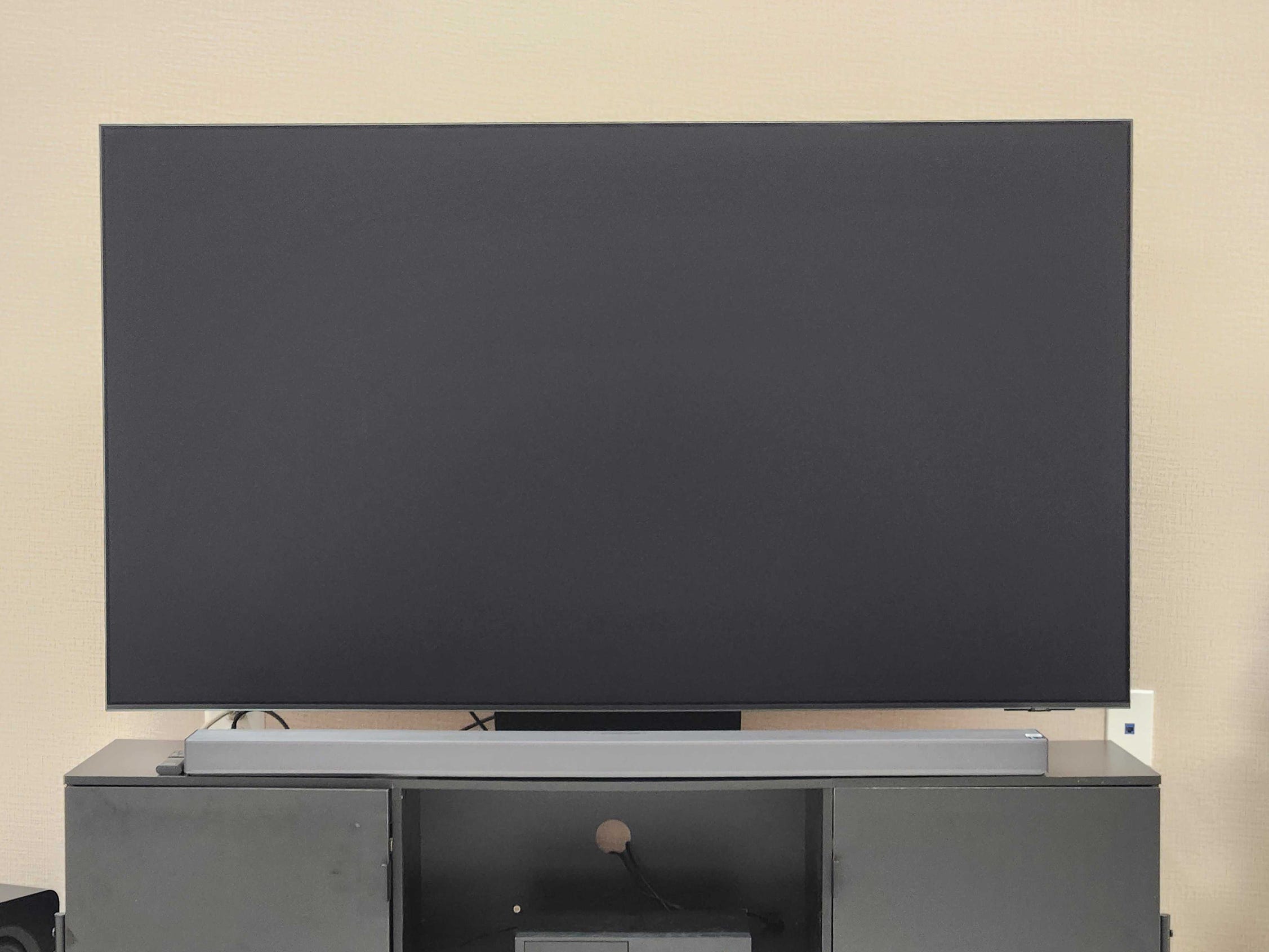
As with the preceding S95D model, theS95Femploys Samsung's anti-reflective technology, which utilizes a matte display instead of a shiny one. Shiny displays are commonly found on rival televisions, such as LG's G5, and while they offer excellent contrast, they may cause mirror-like reflections when viewing TV in a well-lit environment.
The S95F's matte display is capable of scattering and diffusing glare, significantly reducing direct reflections. Samsung claims that this second-generation anti-glare screen provides improved performance compared to the first version. I wasn't able to compare the S95D and S95F directly, but the S95F does an exceptional job in minimizing glare. With the lights on, I didn't experience any distracting reflections on the screen. Of course, if light is shone directly onto the panel, you may notice some faint glare, but this is nowhere near the mirror-like quality of a glossy OLED. This feature is a major advantage for those who enjoy watching TV during the day, and it further establishes the S95F as atop TV for sports.
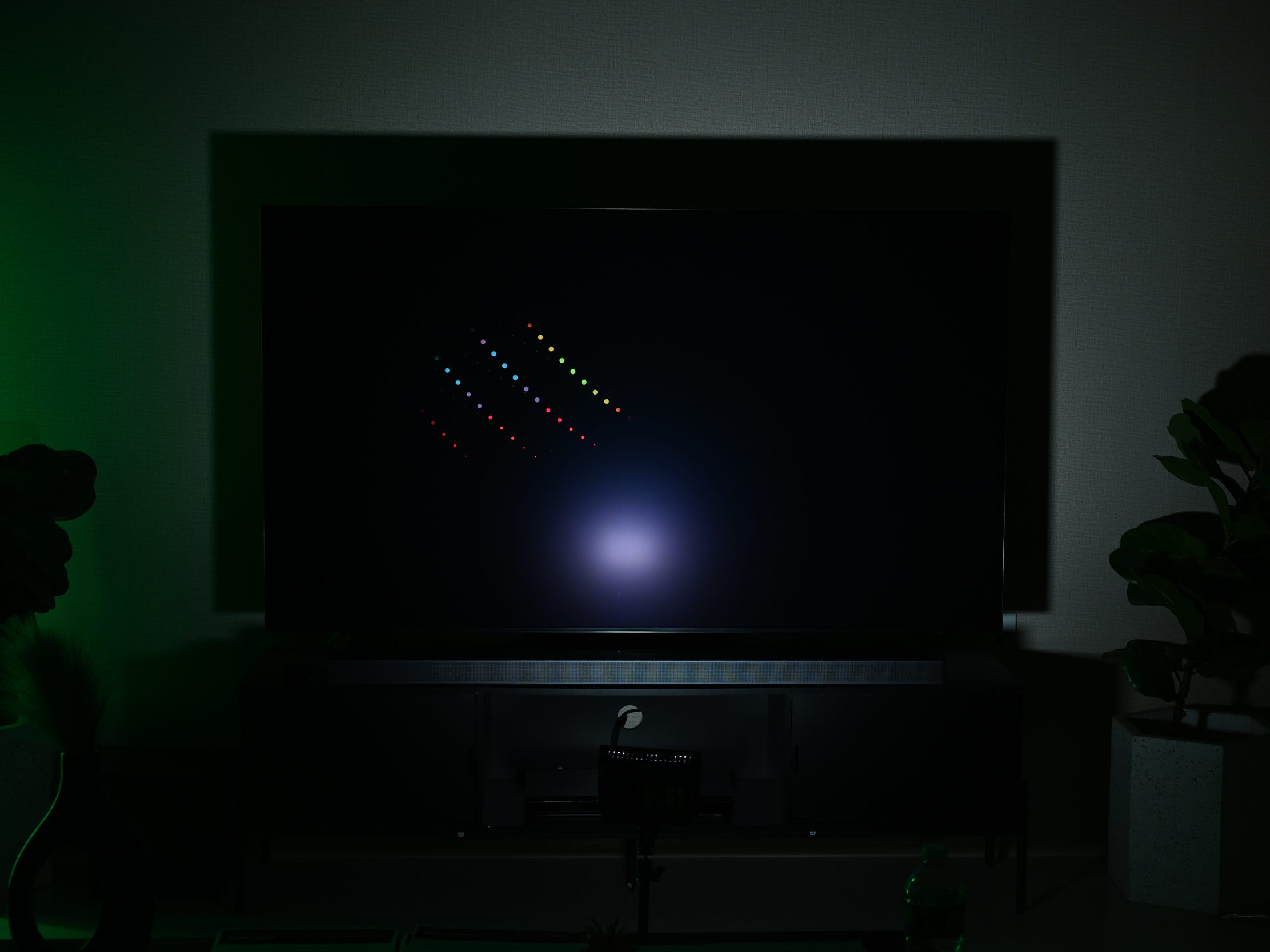
Regrettably, the S95F's matte display still suffers from the same major issue I experienced with the S95D: it raises black levels in well-lit environments. The anti-glare coating spreads light, resulting in blacks that lack depth and seem somewhat washed out. This is particularly noticeable when viewing content with numerous dark scenes. Although this isn't a significant problem when watching vibrant sports events, if you're streaming a film with many dimly lit sequences, the hazy blacks might be bothersome. However, in a dark setting, the S95F's black levels are just as profound as those on rival OLED TVs that have glossy screens.
I'm uncertain whether the new screen offers improved contrast or if I've simply grown more used to the appearance of matte panels, but I found the glare-free technology on the S95F more beneficial compared to the S95D. In the end, I still favor the richer black levels provided by a glossy panel, but if your space has reflections that you can't (or don't wish to) address with curtains, the S95F is an excellent option.
Samsung's intelligent TV system is reliable, but the artificial intelligence functions are disappointing.
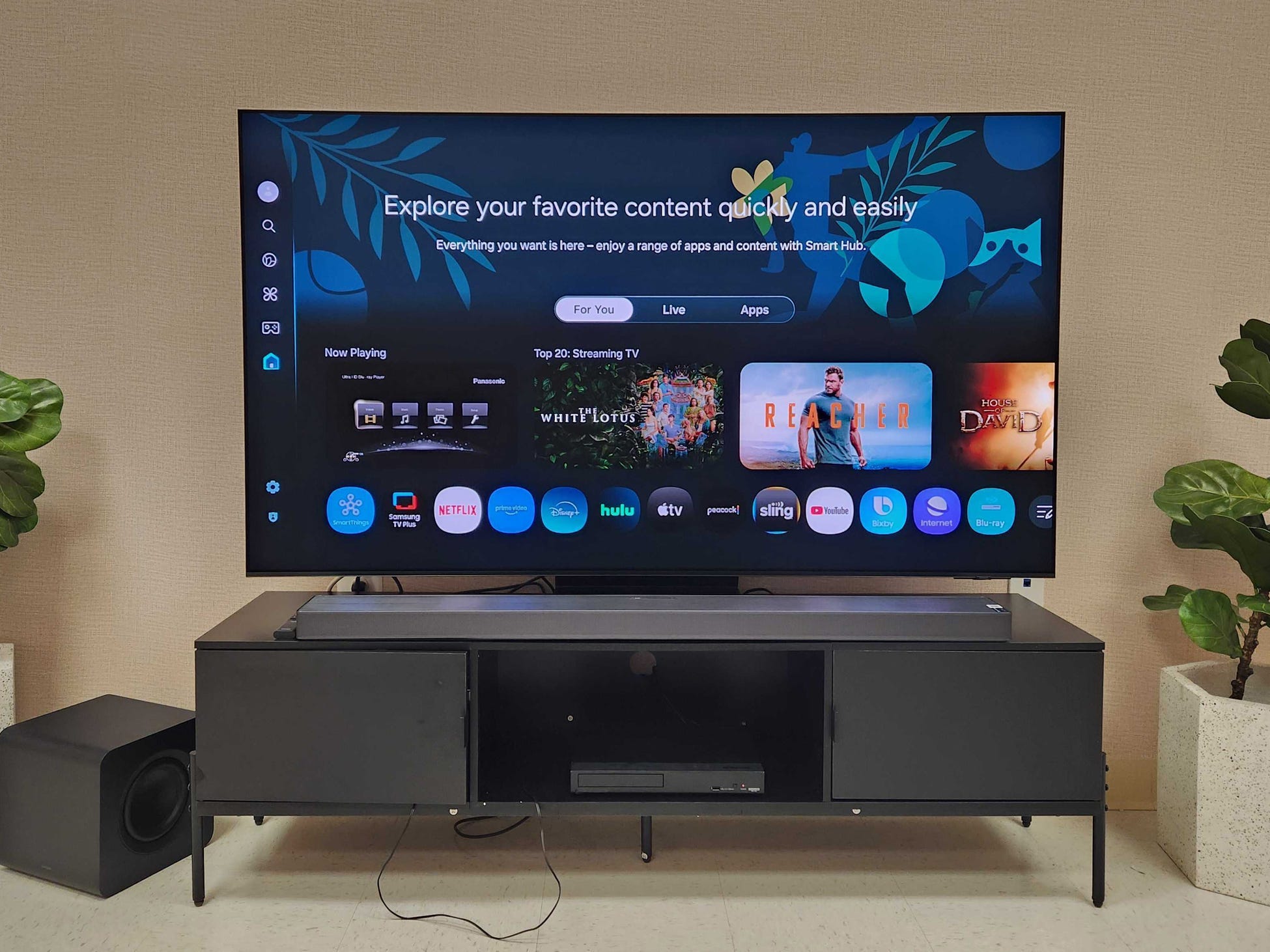
The S95Femploys the most recent version of Samsung's Tizen smart TV operating system. This system is generally good, offering reliable navigation and all the essential features you might require. In terms of overall design and ease of use, I consider it comparable to LG's webOS system and slightly better than Amazon's Fire TV OS, which I find overly cluttered and loaded with advertisements. Nevertheless, I still favor Google TV and Roku OS due to their more efficient user interfaces.
The S95F's side panel provides entry to specific pages for search, ambient mode, Samsung Daily+ (which includes health, work, and smart device control apps), and a gaming section. The gaming section is where you can access cloud services such as Nvidia GeForce Now, Amazon Luna, andXbox Game Pass. The performance of cloud gaming is greatly influenced by your internet connection, but it's an impressive feature.
For voice control, you have the option of using Samsung's Bixby virtual assistant or Amazon's Alexa. You can issue spoken commands without using your hands by saying a wake word or pressing a button on the included SolarCell remote. The remote is comparable to previous models, featuring a small design and the capability to charge using sunlight or indoor lighting, so you won't need to change batteries (it can also be charged more quickly through USB-C). However, it's disappointing that it lacks a backlight, which is a standard feature on remotes from brands such as Hisense and TCL.
In its promotional content, Samsung highlights itsVision AIrange of intelligent features across its newest television models. Nevertheless, the majority of these AI-driven functions are simply enhanced versions of capabilities that earlier TV models from the brand already offered. Several AI-based upscaling and image/sound improvement modes have been refined, yet they are not particularly innovative. These options may be beneficial for viewers dissatisfied with the TV's visual or audio performance, but they frequently cause excessive modifications. In general, I suggest steering clear of these settings and opting for the Filmmaker or Standard mode instead. Meanwhile, the limited number of truly new AI features fall short of expectations.
Initially, there is a Live Translate feature that employs AI to provide real-time subtitles in one of seven languages. This seems impressive, although this functionality is only available with live broadcasts received through an over-the-air (OTA) antenna. A significant number of individuals watch television through cable or streaming services, making this a considerable drawback.
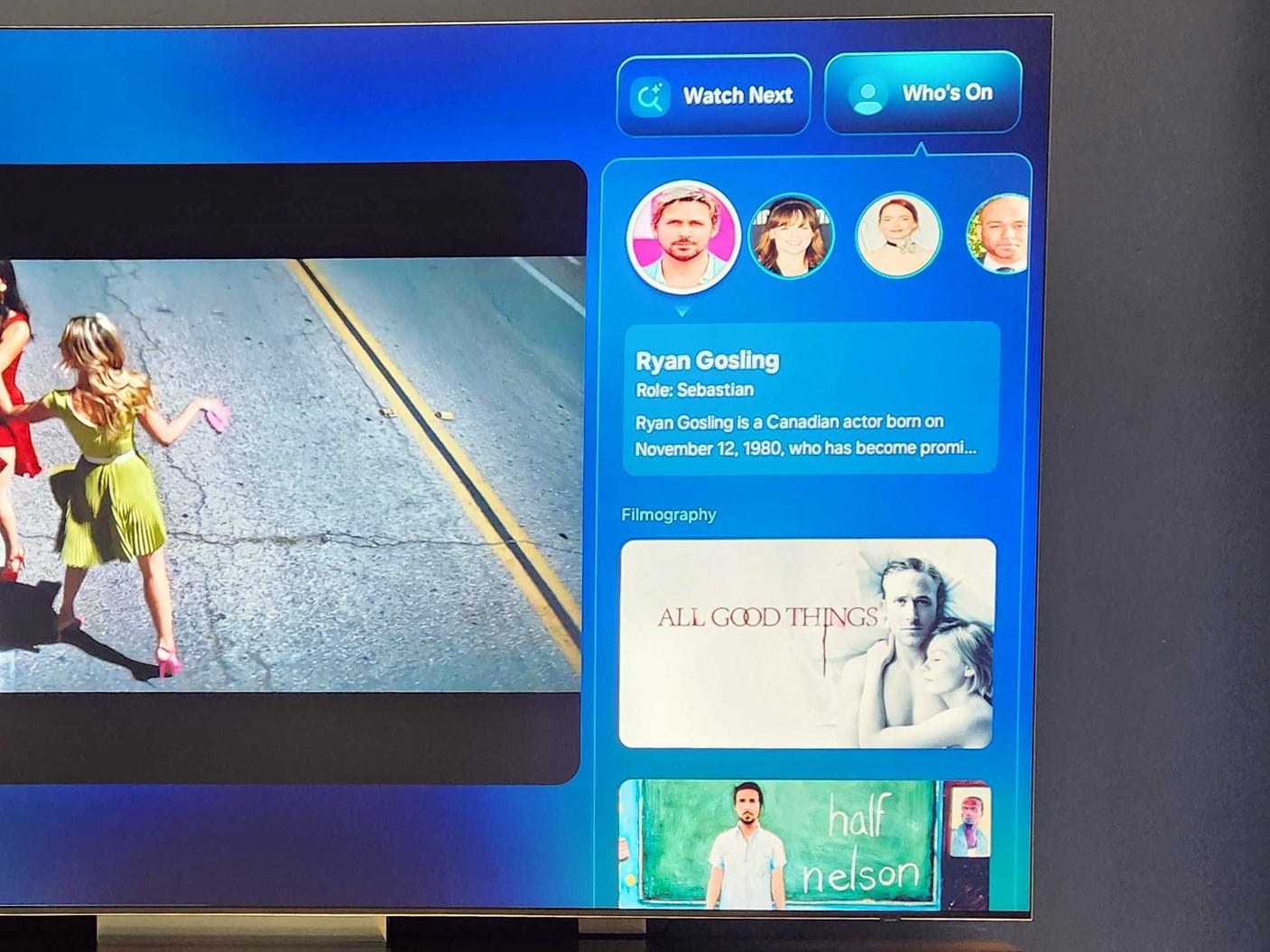
Samsung also highlights a Click to Search function that allows you to press a button on the remote to access information about the content you are viewing, such as details about the actors appearing on screen. This seems comparable to theX-Rayfeature that Amazon provides forPrime Video, but it is only compatible with live OTA broadcasts, cable TV, and Samsung TV Plus. Therefore, it will not function when using streaming services such as Netflix or Disney Plus.
Even with compatible sources, Click to Search is somewhat underwhelming. I tried this feature while browsing channels on Samsung TV Plus and activated it while "La La Land" was playing. A side panel showed the movie's name, its IMDB rating, and a list of other titles scheduled to air on the same channel. Another tab listed the film's main cast and displayed other movies they have appeared in. This is acceptable, but it's quite basic when compared to what Prime Video's X-Ray offers. X-Ray can show all the actors appearing in the specific scene you're watching, not just the top actors in the entire movie. Given its limited compatibility and information, I don't see many users relying on this feature frequently.
After spending time with these features, I don't notice a significant improvement in the brand's smart TV functionality when compared to earlier models. However, that's perfectly acceptable. Samsung's smart TVs have already been sufficiently advanced, so the S95F's upgrades are adequate. However, the notion that Samsung's newest models are introducing a new era of "AI TVs" is exaggerated.
Is it worth purchasing the Samsung S95F?
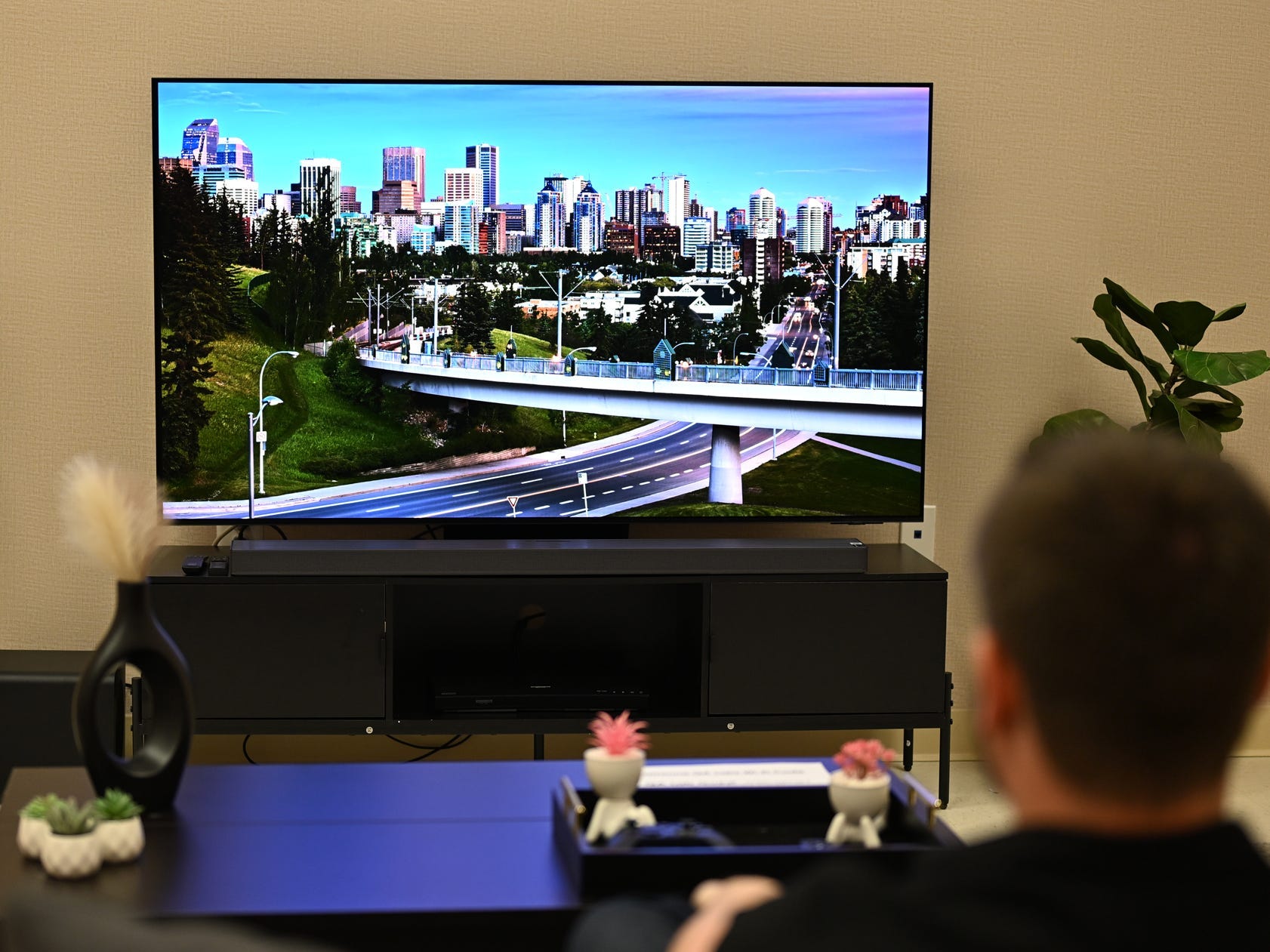
The Samsung S95Fis the most remarkable consumer television the company has ever produced. It provides a noticeable increase in brightness compared to the already excellent S95D, improvements to its anti-reflective display, and a few additional AI-driven features.
However, the AI features are not as groundbreaking or practical as the company's advertisements suggest. Additionally, the TV's matte panel is a polarizing aspect that many either appreciate or find unappealing. Bearing that in mind, I suggest theLG G5as a superior high-end OLED option for those who favor a shiny screen.
But if reflections are causing you trouble in your room, theS95Foffers the perfect answer with superior image quality, broad viewing angles, and excellent gaming capabilities. A new version, named the S95H, will be released later this year, but considering the anticipated price difference, I expect the S95F to provide better value for most of 2026.
For further suggestions, browse our guides to all thebest TVs, best Samsung TVs, best OLED TVs, and best 4K TVs.
If you liked this narrative, make sure to subscribeBusiness Insider on MSN.
Comments
Post a Comment