The concept of having children in space could seem like a storyline from the newest science fiction film.
However, as we step into a 'new era of exploration', experts believe we are nearing the point where it will become a reality.
In a recent study, a team of global specialists argues that conversations regarding reproductive health extending beyond our planet should be given high importance.
They assert the 'issue of humanity'fertility"in space, it is no longer theoretical but urgently practical" as humanity focuses on long-duration missions, such as those toMars.
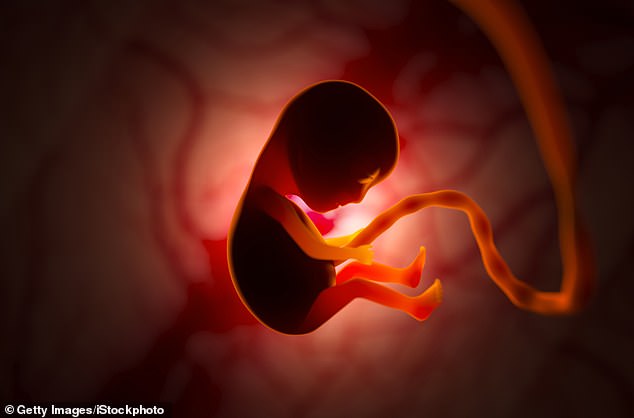
As per specialists, there is insufficient understanding of male or female fertility in space, as well as the growth of embryos and subsequent infants in a weightless environment.
Concerningly, they forecast that space radiation might cause severe developmental issues in newborns, making their bodies potentially unsuitable for adapting back to Earth's gravity.
"As human activity in space grows, reproductive health must no longer be ignored in policy discussions," Dr Fathi Karouia, the study's lead author and a research scientist atNASA, said.
Urgent global cooperation is essential to fill significant knowledge gaps and create ethical standards that ensure the safety of both professional and private astronauts – and in the long run, protect humanity as we aim for a lasting presence outside our planet.
Nine contributors to the study are specialists in reproductive health, space medicine, and bioethics.
They claim that immediate action is required because the opportunity to establish limits on reproduction in space is quickly disappearing.
"Although there have been more than 65 years of human spaceflight, there is still limited understanding of how the space environment affects the human reproductive system during extended missions," the review, published in the journalReproductive Biomedicine Online, reads.
Prolonged periods in space may present risks to the reproductive capabilities of both female and male astronauts, such as exposure to cosmic radiation, changes in gravitational conditions, psychological and physical stress, and disturbances to the body's internal clock.
The group mentioned that existing data indicates short-term space missions do not greatly affect male fertility, as two Apollo astronauts have had children after their time in space.
A trip to Mars, in contrast, would result in significantly greater radiation exposure – which might 'possibly affect testicular function, long-term fertility and the well-being of future children'.
In the meantime, data gathered from 40 female astronauts shows that both pregnancy rates and associated complications are similar to those observed in women of the same age on Earth.
Nevertheless, as extended missions are increasingly common for women, the team emphasized that it is 'essential to comprehend the impact of space travel on reproductive endocrinology, hormones, pregnancy, and assisted reproductive technology outside Earth.'

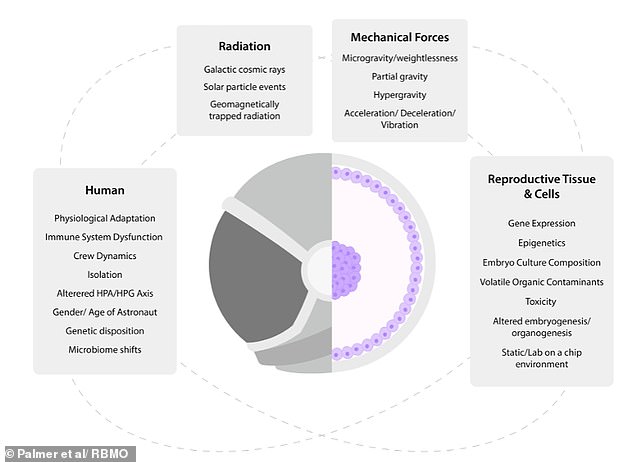
In their research, the specialists mentioned that extended space exploration could include moving eggs, sperm, or embryos from Earth to different planets.
One possible approach might be to freeze-dry eggs or sperm for future application in IVF.
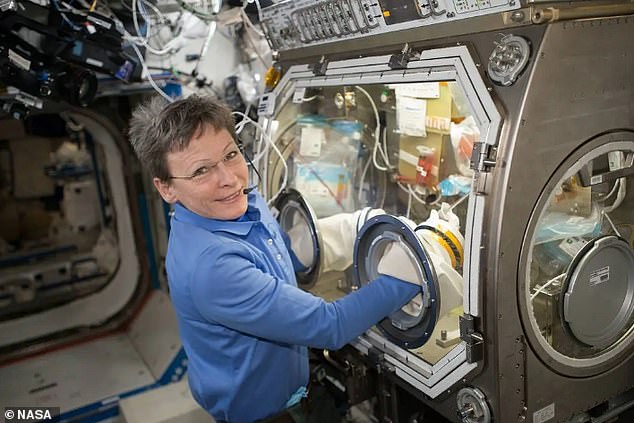
'Several types of equipment utilized in space and applied in biological studies aboard the International Space Station resemble the tools present in an IVF laboratory on Earth,' they noted.
They claim that the development of spaceflight and IVF has followed a comparable progression.
And they claimed that IVF is "set to have a vital part in the future of human space exploration."
Over 50 years ago, two major scientific advancements changed the understanding of what was biologically and physically achievable – the first Moon landing and the initial confirmation of human fertilisation outside the body, according to clinical embryologist Giles Palmer from the International IVF Initiative Inc.
Currently, over half a century on, we contend in this report that these previously distinct revolutions are converging in a tangible and largely overlooked situation.
Outer space is turning into a place for work and travel, while reproductive assistance technologies have evolved significantly, becoming more automated and readily available.
The group mentioned that the Moon continues to be the closest and most feasible location for studying how living organisms operate in lower gravity.
"It might serve as a natural starting point for regulated, moral, and well-structured reproductive research that could, eventually, enable long-term life on Mars," they stated.
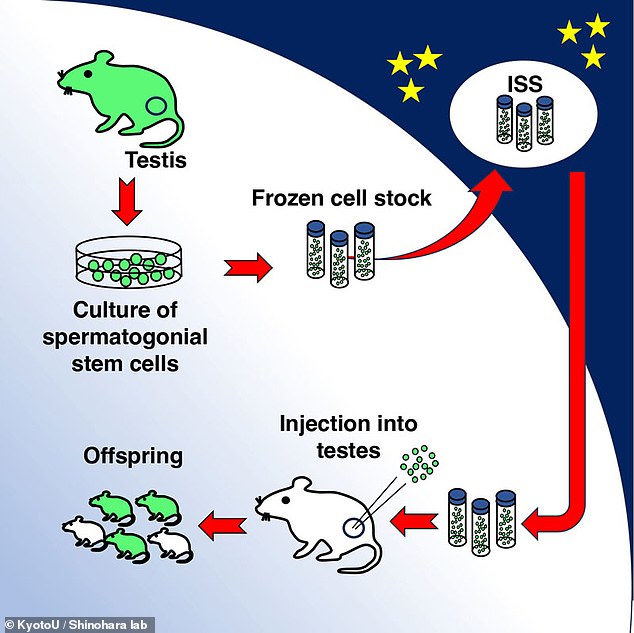
In the previous year, scientists from Kyoto University demonstrated that mouse egg and sperm cells were able to endure in space and subsequently result in healthy offspring.
In the meantime, the Dutch biotechnology startup Spaceborn United has introduced the first small-scale laboratory for in vitro fertilization (IVF) and embryo development into space.
'Humanity is gradually moving towards the time of regular space travel, with ideas of lunar and Martian colonies transitioning from science fiction to business goals,' the researchers stated.
With space missions extending in duration and varying in crew makeup, moving from weeks to months, and potentially years, grasping the implications for fertility and reproduction has grown increasingly important and necessary.
Read more
Comments
Post a Comment