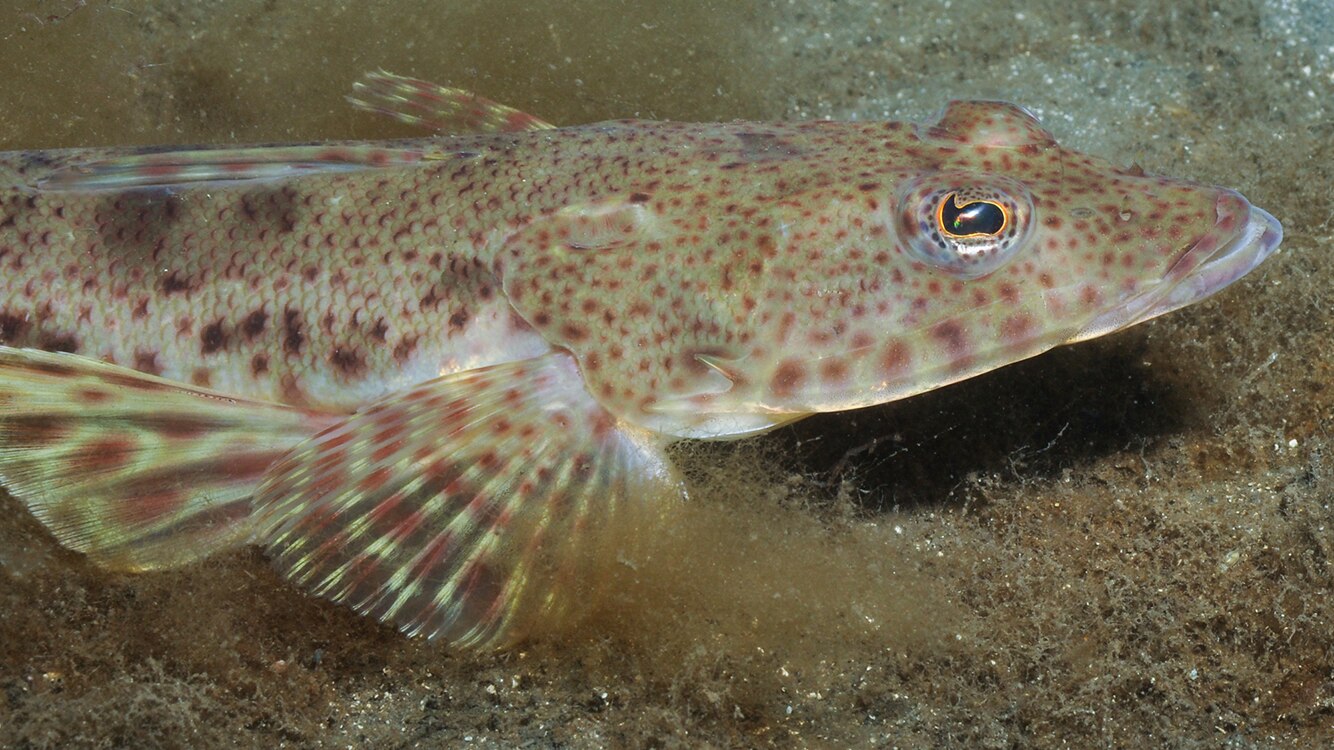
A number of Tasmania's well-liked fish species are no longer available in a significant portion of the state's southern waters.
Starting March 1, the Tasmanian government will temporarily shut down the south-east sand flathead area.
The Primary Industries Minister, Gavin Pearce, stated that the figures have kept decreasing since the population was identified as low in 2022.
He mentioned that researchers had found the population had "significantly dropped" to 5% of its expected level.
"The population of sand flathead has fallen to a level that [scientists] consider critically low," he stated.
We hope to witness our descendants catching sand flathead, which is the reason we are introducing a temporary restriction.
Although this may be challenging for certain individuals, I am confident that our recreational anglers will comprehend the reasoning behind this choice.
Stock replenishment and awareness initiatives underway
Mr Pearce mentioned that the government is allocating $1.2 million to the Institute of Marine and Antarctic Studies (IMAS) to oversee a stocking and relocation initiative throughout Tasmania.
However, he stated, the emphasis would be on the state's south-eastern waters as that was the region of greatest worry.
"In simple language, it's overfished. It has been fished out," he said.
I don't wish to be the person who remains inactive regarding that.
IMAS lead researcher Sean Tracey stated that the temporary shutdown would give them the opportunity to carry out the essential tasks required to start the restocking initiative.
"Sand flathead breed during the spring and summer months, so we should aim to plan our efforts around their natural breeding patterns," he said.
So, I anticipate observing some fish activity later this year during the spring.
David Midson, the fisheries manager at the Department of Natural Resources and Environment Tasmania, mentioned that they will be guiding fishermen on methods to avoid capturing sand flathead.
"We'll be highly concentrated on assisting individuals in learning to catch different types of fish," he stated.
You can still go fishing in the south-east. There are plenty of excellent fishing opportunities in the surrounding waters, it's just that we're targeting different types of fish.
Concerns over numbers for many years
The sand flathead is considered one of the most favored fish by amateur fishermen in the state, with the species once making up roughly 50 per cent of the catch in the south-east region.
In 2022, scientists from IMAS noted that the ability of sand flathead populations across the state, especially in the southern and eastern regions, had dropped to concerning levels.
At the time, lead researcher Nils Krueck referred to the decline as "the most intriguing and disheartening discovery" from that year's fisheries evaluation.
This was succeeded by adjustments to catch limits and minimum and maximum size regulations, with Tasmania Police levying significant penalties on both recreational and commercial fishers who were caught violating the guidelines.
"you may also face the confiscation of your catch," police stated in November 2023.
Depending on how serious the violation is, seizures may also involve machinery and even ships.
The modifications were backed by the Tasmanian Association for Recreational Fishing (TARFish) during that period, despite the organization stating the choice was a "difficult" one for its members.
"They aim to contribute to maintaining their lifestyle and guarantee its availability for their children and grandchildren," said chief executive Jane Gallichan.
The updated guidelines are available on theFishing Tasmania website.
Government's response quickly criticised
Although they supported it in 2023, TARFish posted on Facebook, "all recreational fishers should be ashamed of today's announcement."
"Recreational fishermen are being required to cover the costs once more for a decade of poor management," they stated.
Janie Finlay, the Tasmanian Labor Party's shadow minister for primary industries, also claimed the decision stemmed from over ten years of poor management.
She mentioned that the government had been "absent from the scene" since it supported a recovery initiative in 2022.
A former professional fisherman and Independent Braddon MP, Craig Garland, on the other hand, backed the government's decision.
"It's high time to implement decisive measures to support the recovery of what is evidently a depleted population," he stated.
We are the guardians of our fisheries, and it's our responsibility to ensure we act appropriately so this famous fish has a sustainable future.
While setting up a fishing rod for his son at the Lewisham boat ramp in southern Tasmania, recreational fisher Ricky mentioned that sand flathead are the primary fish he targets.
"They're a fantastic, enjoyable fish to catch, they taste great and they were once simple to catch for the young man," he said.
Decision praised
Environment Tasmania released a statement praising the government's "challenging choice".
"We recognize that this will be a setback for the recreational fishing community, but it is hoped that it will lead to a faster recovery of fish populations in the future," said Rebecca Howarth, a marine campaigner with Environment Tasmania.
"Although these choices may be challenging for our leisure fishing community, they are essential for maintaining strong fish populations and fishing prospects for the future," she stated.
Ricky mentioned that even though he casts his line every three weeks or so, he doesn't often landing the highly sought-after fish.
They appear harder to catch nowadays, and they don't seem to reach the size they used to as often.
"We have spent a few hours here today without catching any yet," he stated.
Ricky mentioned that a restriction on sand flathead fishing would be "quite challenging" for amateur anglers.
"We own a boat, but it's not really worth using it most of the time, especially if it's just for catching two or four fish," he said.
A South Hobart teenager named Sam was also struggling at Lewisham.
"Now, with the updated size restrictions, it's really challenging to find ones that are edible now, but I suppose it's beneficial in the long term," he said.
If there is a valid justification for [the sand flathead fishing ban] and it appears it could address the flathead issue, then I suppose I would back it.
Comments
Post a Comment