BIOGRAPHY Crick
Matthew Cobb
Profile Books, $65.00
Many reviews of Cricksuggest that Matthew Cobb's excellent biography could be "a challenge for the average reader". Perhaps that's true, but if you find yourself needing to check a word or two while enjoying this extraordinary account of biologist and DNA pioneer Francis Crick, it will be worthwhile.
I had to revisit concepts I hadn't encountered since my high school biology classes, and if you can't tell your chromosomes from your ribosomes, you're not alone, butCrick (subtitled A Mind in Motion) presents a challenge that is highly rewarding.
Crick, along with numerous colleagues, achieved breakthroughs that have impacted the lives of countless people. However, when they began in the early 1950s, treating genetic disorders, determining ancestry through DNA analysis, and identifying offenders were considered the realm of science fiction.
His name will forever be associated with James Watson, his DNA partner and co-Nobel Prize winner. In 1951, Crick and Watson discovered the unusual structure of the DNA molecule, revealing it to be a double helix. Their initial physical model, constructed using laboratory clamps and spherical molecules, resembled a decorated spiral staircase.
DNA, as we now understand, holds a significant portion of the genetic information that defines us as the beings we are, along with various details that influence how future generations may develop.
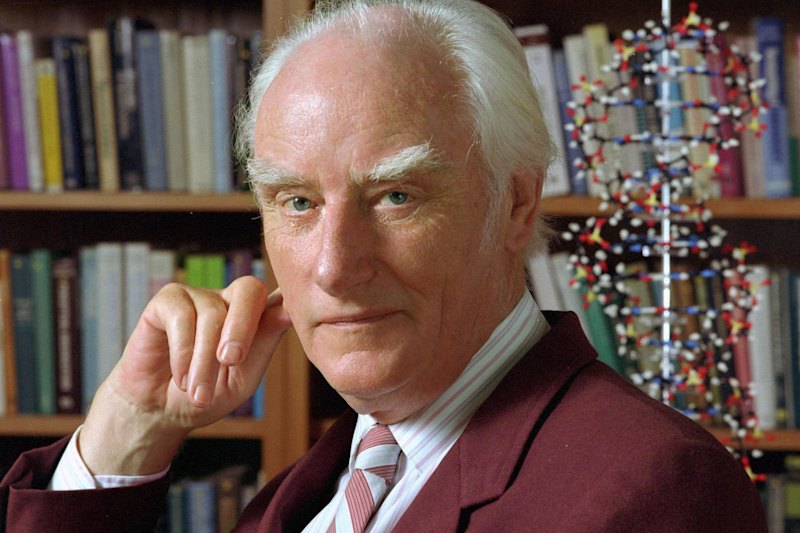
Francis Crick was born in 1916 in Northampton, England, and as a young person became deeply involved with the unusual scientific ideas of the Edwardian era that were available.The Children’s Encyclopaedia(including the racist eugenic stereotypes that were common between the world wars). He earned his BSc in 1937, and like many young scientists of that time, was assigned to wartime duties, developing protections against German magnetic mines.
At the conclusion of the war, he focused on biology, and a significant portion of Cobb's investigative work explores how Crick became captivated, even consumed, by deciphering the molecular foundation of genetics. There is considerable discussion about the intellectual rivalry that was a part of academic life in postwar England, and Cobb excels in depicting this vanished world, where vibrant personalities held much more influence than they do within the structured environment of today's universities. Crick submitted just one grant proposal throughout his career and never instructed a single undergraduate class.
Throughout his lengthy life (he passed away in 2004, whereas Watson, his younger partner, died last October at the age of 97), he was able to provoke and irritate numerous top intellectuals of his time, merely because he excelled at posing questions that no one else could answer.
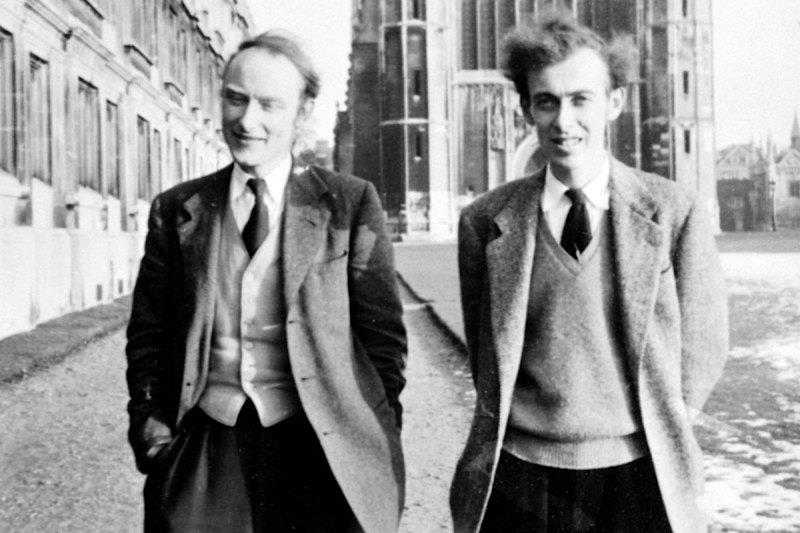
He was a person who could acknowledge when he was mistaken, yet this modesty was accompanied by a sharp ability to deflate the exaggerated claims of other brilliant minds, whom he believed should have been more aware. He was highly critical of the renowned mathematician Roger Penrose's idea that human consciousness could be an unusual resonance of quantum uncertainty, and Cobb provides detailed discussion on Crick's explorations, following his relocation to La Jolla in southern California during the 1980s, into this "problem of consciousness."
Throughout his life, Crick maintained a strong materialist perspective in all intellectual pursuits, even though he had a deep interest in theatre, experimental poetry, and visual arts. He saw no conflict in the idea that his thoughts were the result of intricate chemical processes within his brain. In fact, he frequently highlighted that any efforts to understand the origins and functions of consciousness are always limited by a fundamental truth: we are employing our own imperfectly conscious brains to try and grasp what consciousness is—or isn't.
After careful thought (a skill Crick excelled at), he was fairly certain about how we think the way we docouldbe comprehended. Nevertheless, he was still confident that the solutions could be found in molecular neurochemistry, rather than quantum physics, psychiatry, or even the arts he cherished.
Returning to the discovery of the DNA structure: Cobb addresses the commonly repeated claim that Rosalind Franklin, the talented yet quiet X-ray crystallographer who produced one of the most remarkable images of the double helix in 1951, was deprived of a Nobel Prize by Crick and Watson, although Watson was definitely responsible for downplaying her contribution in his self-serving 1968 book.The Double Helix.
Franklin was a close friend of Crick and his artist wife, Odile, frequently staying at their London home. They maintained a strong friendship and exchanged ideas until her premature passing due to cancer at the age of 37. The so-called uncredited "Image 51" has emerged as a feminist symbol in the history of science, and for valid reasons, considering the treatment of women in laboratories during that era. Indeed, another scientist working on the project viewed it, and it did contribute to confirming the structure.
Franklin passed away in 1958, long before the 1962 DNA Nobel Prize was given out, and her role was acknowledged at that time. The Nobel Prizes cannot be awarded after someone's death or changed later.
However, Franklin continues to exist. The European Space Agency's Mars rover, set to launch in 2028 in pursuit of molecular signs of life, is appropriately named in her honor.
The Booklist is a weekly publication for literature enthusiasts by Jason Steger. Receive it every Friday.
Comments
Post a Comment