A private investigator conducted several inquiries for a newspaper company, claiming they were lawful when carried out, he stated to the High Court.
Daniel Portley-Hanks repeatedly confirmed that using his services by the media was not against the law, as mentioned on his website, according to the court.
A private investigator based in the US mentioned that he later discovered some of his actions were against the law in Britain, although this was not his initial belief.
Mr. Portley-Hanks traveled from the United States to provide testimony in support ofPrince Harryand six other prominent individuals in a privacy lawsuit against Associated Newspapers - the company that publishes the Daily Mail and The Mail On Sunday.
Associated rejects allegations that its reporters hired investigators to obtain data illegally, such as through phone interception, tapping landline calls, and 'blagging' confidential details.
Mr Portley-Hanks, aged 79, mentioned that he had spent many years as a private investigator, with some of his clients being various British newspapers.
Amendments to data protection laws and the consequences of the Leveson Inquiry on media standards led him to be requested to confirm that his actions were lawful, he stated.
The court was presented with an email he sent to an executive at The Mail On Sunday (TMOS) in 2011, in which he stated: 'Rest assured that throughout the period I worked for TMOS and the Daily Mail, all the databases utilized were either public databases accessible to the general public, or accounts established for news media purposes.'
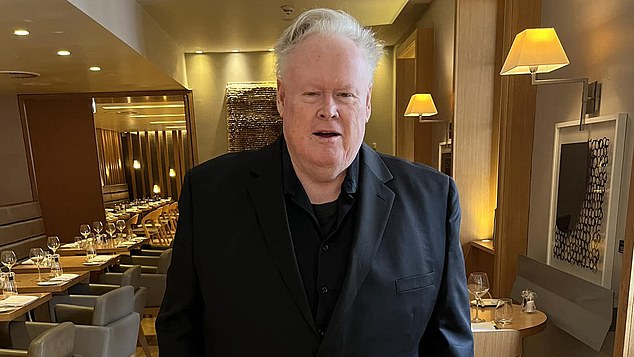
During cross-examination conducted by Catrin Evans KC, representing Associated, Mr Portley-Hanks stated that certain levels of information he obtained were lawful for private investigators handling legal matters, but not for the media.
But he mentioned that he hadn't always distinguished between the two groups of information and had added some details in reports sent to media clients because he was 'too lazy' to remove them.
He was presented with a sequence of emails from reporters who asked for phone numbers and addresses, but not other information, which he subsequently provided, including social security numbers.
He stated that he believed the phone numbers, addresses, and other details he shared regarding celebrities and public individuals, including the child sexual abuse perpetrator Jeffrey Epstein, were utilized to assist journalists in reaching out to them for interviews.
Mr. Portley-Hanks stated that a lot of his investigations were 'completely lawful'.
Following a review by David Sherborne, the lawyer representing the Duke of Sussex and other claimants such as Baroness Lawrence and Sir Elton John, the detective stated he thought journalists and executives were aware some of his inquiries were unlawful.
Mr. Portley-Hanks mentioned that he had become bankrupt following the decision of British newspapers to cease utilizing his services.
He was imprisoned in 2017 due to his involvement in a gambling and extortion scheme and mentioned that he was behind bars when Graham Johnson, a convicted phone hacker and ex-tabloid journalist, tried to see him.
Following his release, he mentioned that Mr Johnson had come to see him and expressed a desire to reveal wrongdoing within the media, providing a £6,000 advance to write a book titled Hollywood Detective, detailing his life.
The book was released by Mr Johnson's company, Yellow Press Ltd, but did not perform well commercially. Mr Portley-Hanks mentioned he was never compensated, stating, 'I haven't received a single cent from this book.'
Mr Johnson, who will also provide testimony in the case, is currently a member of a 'research group' assisting the legal team representing the Duke of Sussex and other plaintiffs.
The trial continues.
Read more
Comments
Post a Comment